Imagine on a random day you decide to go to the hospital to check on a sick friend.
Whilst you are there, a nurse pushes you into the operating room.
You are told you need to operate on the person laying in-front of you or else they will die.
Now imagine in the next room the same thing has happened but the other person is a licensed surgeon.
Do you think you would save the life of the patient? And what do you think differentiates you from the person next room?
The answer to the two is the same, ‘experience’.
You would not be able to operate or save the patient because you have never done it before and you would not know what to start with or how to go about it.
You and the person next room have different experiences in the field.
And you would most likely lose consciousness or chicken out at the sight of blood.
As the philosopher John Locke will argue, we are born with a blank slate a tubula rasa on which we acquire knowledge of the world through experiences.
We collect knowledge and apply this knowledge to situations.
What we fail to comprehend is that experiences affect all spheres of our lives. Be it in our careers, professions, businesses and most importantly in interpersonal relationships.
How we view and approach interpersonal relationships is dependent upon the experiences we had as infants with a blank slate.
What we wrote on this tabula rasa is what we will use as reference for the rest of our lives.
This is why at an earlier age positive relationship between the parents especially the mother and the infant is important.
Because like I have already say, the experience the infant will acquire from the relationship with the mother will affect how the child approaches relationships with others.
It is not a popular opinion but our personality disorders are mostly linked to the relationships we had as infants with a blank slate.
As human beings, we fail to do things which are outside of our experiences.
Like how unlicensed surgeon will fail to operate on a patient, one will also most definitely fail to reciprocate love in relationships if he/she does not know what love is.
We have these presumptions that romantic relationships are doable by every one of us.
That there are easy and can be done by every single person correctly.
Allow me to burst your bubble for a minute.
Romantic relationships are based on everything to do with love.
We have different experiences with what love is.
So, basically romantic relationships will be approached differently with a lot of failures than success depending on the experience we ourselves have.
But what do we do?
We keep on moving from one failed relationship to the other.
We keep on blaming our exes,
‘oh, he did not truly like me’,
‘he never loved me’,
and best of all, ‘he just used me’.
Okay, but what is your definition of love?
How come every ex of yours is the same? Out of all the ten relationships you have had with different people, all of them are the problem?
If you are able to answer these questions correctly without subjecting your emotions.
You will realize that in most of these relationships we, yes we are the problem.
Take a minute to analyze the relationship problems of your siblings, if you have any.
After that, analyze the relationships / marriages of your cousins, aunts, uncles and or every direct relative of yours.
Believe me, you might find more similarities than differences.

For example, you might find out that there are more divorcees in your family with so many other failed relationships.
Yes, I do understand that things end, things happen.
But, is it normal for everyone to have a failed relationship?
Maybe, instead of blaming others and even on generational curses and bewitchment,
try to look at this as a generational trauma that is being passed on and controlling interpersonal relationships from one generation to the other.
As a family, we keep on creating these toxic environments to our infants.
Who then grow up basing on the same environments, only to create the same to their children then their children and it keeps going on and on.
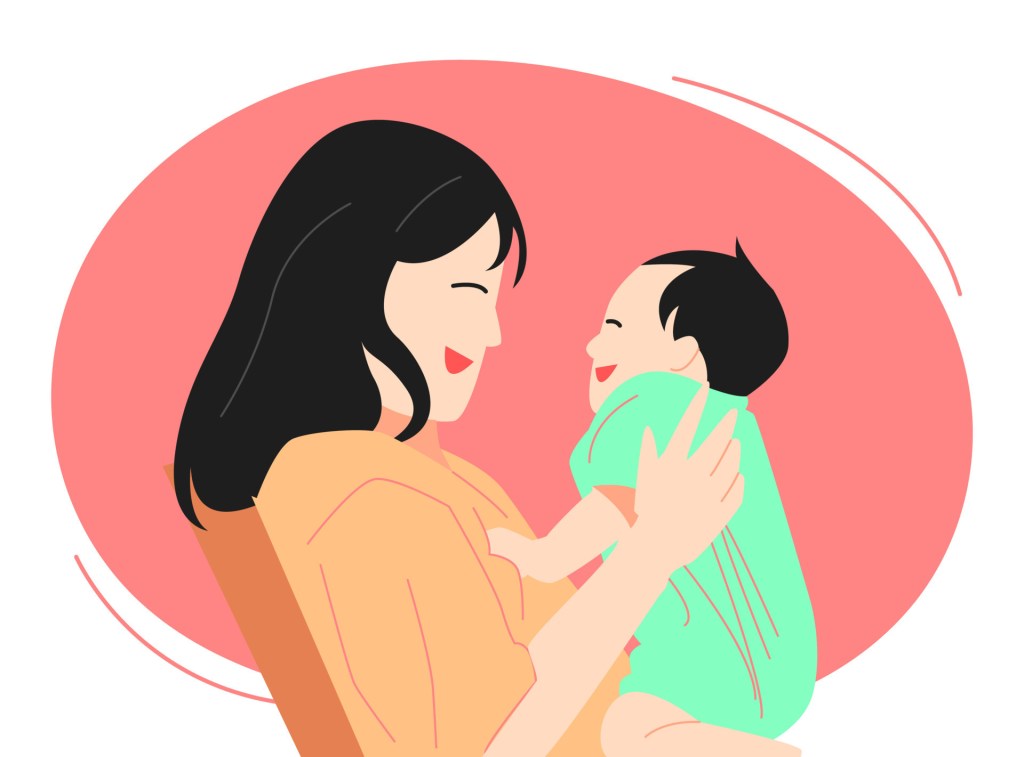
Dr. Gabor argues that at all times a mother is supposed to show care, open affections, be less stressed, less depressed, emotionally available and catering to the needs of the child especially at the infancy stage.
Because the experience gained from this stage will be used as a blue print in all other interpersonal relationships the child will have in the future.
The opposite of this is true, if the mother is stressed, always depressed, always in a bad mood and un-catering to the affection needs of the infant, the child grows up feeling unwanted.
The child then begins to view herself/himself as alone in the world.
So, she / he begins to create copying mechanisms to endure the loneliness.
But the same mechanisms become adaptation traits of the child now as an adult.
According to Dr. Gabor what should have remained as a temporary coping mechanism becomes a life-long adaptation trait.
Feelings of being unwanted as a child will push the adult to work hard towards being needed by others.
You become a workaholic because you feel like the world needs your dedication.

You become codependent in romantic/plutonic relationships, giving too much of love, attention, affections, and time even if it is not reciprocated to you.
You become a people pleaser, you feel like if others are happy it makes you to be needed.
Guess what? When the child who felt unwanted as a child grows up to have children of her own, she uses the same blue print her mother used on her.
Boom! a third generation of codependents, workaholics, people pleasers and anxious lovers is born.
If you are in doubt, go ahead and ask how your guardians were raised, and their guardians before them.
Now look at the traits that you all share.
What we need to know from all of this is that trauma is not inherited.
It is learned.
This leaves room for change.
You could wake up today and reset the generations to flow from you.
How?

Acceptance is key.
Accept that you have a problem.
Accept that you are in a world that you do not have prior knowledge of.
Accept that you were failed by your caregivers who in turn got failed by their caregivers.
Accept.
Then begin to challenge and to re-write some knowledge on the tabula rasa.
‘Do I have to please them to keep them around’,
‘should I always give attention without being given back’,
‘and should I always reach out first’.
The list could go on, just question every habit you tend to do and decide how the new-born you will act from then on.
It will take time but we will get there.
Above all, always remember you are deserving of all the love the world could give.
You have had your low lows but that is how we learn to grow.
You could become whoever you want any day, any minute or second and that is the best part.
 Trauma & healing
Leave a comment